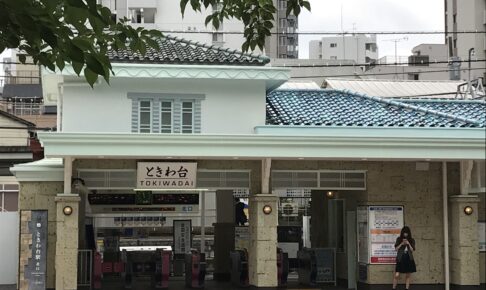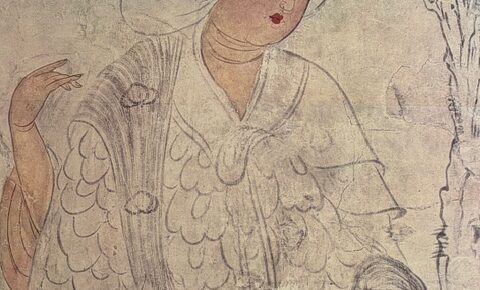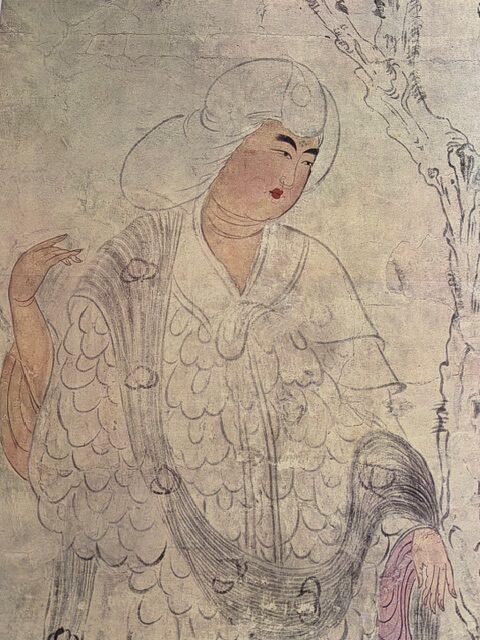

熟田津(ニキタツ)に 舟乗(フナノ)りせむと 月待てば 潮もかなひぬ 今は漕ぎ出でな
Waiting for the moon to rise to set sail in Nikitatsu, the tide has turned right.
Now is the time to row out to sea straight.
額田王の歌
熟田津(ニキタツ)に 舟乗(フナノ)りせむと 月待てば 潮もかなひぬ 今は漕ぎ出でな
(左注) 右は、山上憶良大夫の類聚歌林を検ふるに曰はく「飛鳥岡本宮に天の下知らしめしし天皇の元年己丑、九年丁酉の十二月己巳の朔の壬午、天皇・大后、伊予の湯の宮に幸す。後岡本宮に天の下知らしめしし天皇の七年辛酉の春正月丁酉の朔の壬寅、御船西征して始めて海路に就く。庚戌、御船、伊予の熟田津の石湯の行宮に泊つ。天皇、昔日より猶ほ存れる物を御覧し、当時忽ち感愛の情を起す。所以に歌詠を製りて哀傷したまふ」といへり。すなはちこの歌は天皇の御製なり。ただ、額田王の歌は別に四首あり。
右は、山上憶良大夫の類聚歌林を検ふるに曰はく「飛鳥岡本宮に天の下知らしめしし (略) 天皇・大后、伊予の湯の宮に幸す。後岡本宮に天の下知らしめしし (暦略) 御船西征して始めて海路に就く。(略) 御船、伊予の熟田津の石湯の行宮に泊つ。天皇、昔日より猶ほ存れる物を御覧し、当時忽ち感愛の情を起す。所以に歌詠を製りて哀傷したまふ」といへり。すなはちこの歌は天皇の御製なり。ただ、額田王の歌は別に四首あり。
(現代語訳)
熱田津で舟出をしようとして月の出を待っていると、潮もちょうどよくなった。さあ、今こそ漕ぎ出そう
Waiting for the moon to rise to set sail in Nikitatsu, the tide has turned right.
Now is the time to row out to sea straight.
Note:
When examining the Ruijukarin, a collection of poetry editted by Yamanoue Okura no Daifu, it is said that “At Asuka Okamoto Palace, the whole nation knew about it (omitted). The Emperor and Empress Dowager visited Yunomiya in Iyo. Later, at Okamoto Palace, the whole nation knew about it (omitted). The Imperial ship set out on its voyage westward for the first time (omitted). The Imperial ship docked at Ishiyu Palace in Nikita-tsu, Iyo. The Emperor, seeing something that had still remained since ancient times, was instantly overcome with emotion. He composed a poem to express his grief.” In other words, this poem was written by the Emperor. However, there are four other poems by Nukata no Okimi.
(コメント; Comment)
斉明7年(661)1月、九州へ向かう途中、田津(ニキタツ:今の愛媛県松山市)に滞在し、出航のタイミングをはかっていたときの歌。前年、朝鮮半島の百済(クダラ)が、新羅(シラギ)と唐によって侵略され、日本に支援を求めてきた。この支援要請を受けて軍を出立させた。このとき斉明天皇(女帝; 中大兄皇子の母)、中大兄皇子、額田王は一緒だった。斉明天皇はこの年8月に死去する。
白村江(ハクスキノエ)の戦い(663)は、この2年後。中大兄皇子(後の天智天皇)が指揮を執ったが、百済復興を目指す日本・百済連合軍は、唐・新羅連合軍に惨敗した。これが朝鮮半島への進出を断念させるきっかけとなり、日本は唐の侵攻に備えて防人の設置など防衛体制を強化した。
額田王が歌を詠んだのは、このような国際関係緊張が高まる中でのことだったのである。
This poem was written in January 7th of Saimei (661), when the Japanese were staying in Nikitatsu (present-day Matsuyama City, Ehime Prefecture) on their way to Kyushu, and were gauging the timing of their departure. The previous year, Baekje (Kudara) on the Korean Peninsula had been invaded by Silla and Tang China and had requested Japan’s aid. In response to this request for assistance, an army set out. Empress Saimei (mother of Prince Nakano Oe), Prince Nakano Oe, and Princess Nukata were together at the time. Empress Saimei died in August of that year.
The Battle of Baekgang (663) took place two years later. Prince Nakano Oe (later Emperor Tenji) was in command, but the allied Japanese-Baekje forces, aiming to restore Baekje, suffered a crushing defeat at the hands of the allied Tang-Silla forces. This prompted Japan to abandon its plans to advance into the Korean Peninsula, and it strengthened its defenses, including the establishment of defenders, in preparation for a Tang invasion.
It was during this time of rising tension in international relations that Nukata no Okimi composed her poem.